 Vault
Zero-knowledge by design
Encryption happens in your browser. The server receives ciphertext and a login key that cannot be turned back into your password.
Every entry is encrypted on your device before it is saved. The server stores ciphertext and holds no key that opens it — not your master password, not a copy of it, not anything that can be turned back into it.
Accounts are currently opened by invitation.
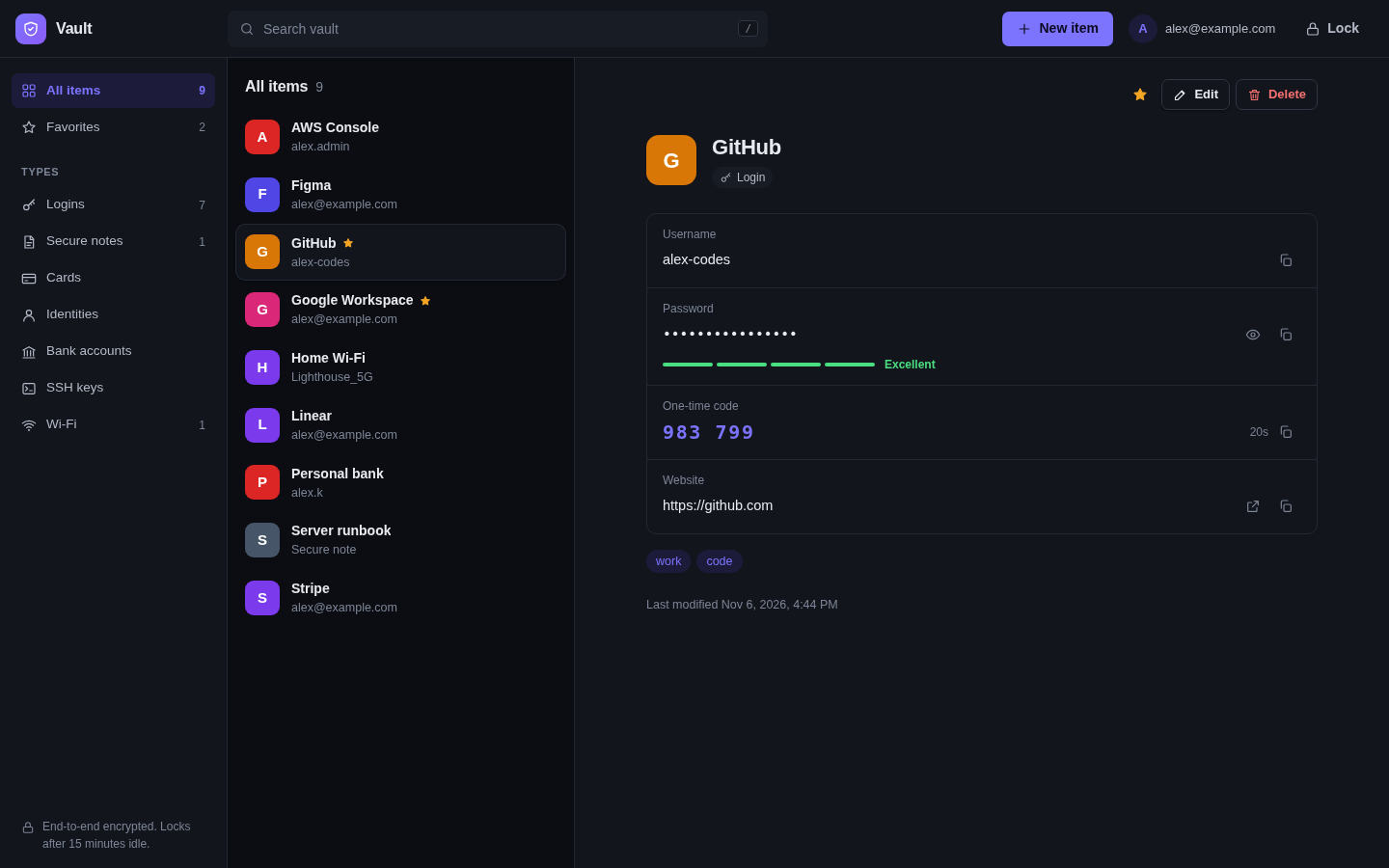
Most breaches start on the server. Vault is designed so that winning there gets an attacker nothing they can read.
Encryption happens in your browser. The server receives ciphertext and a login key that cannot be turned back into your password.
Entry names, usernames, websites and tags are encrypted along with the passwords. A stolen database does not list which sites you use.
Search, favourites, one-click copy, two-factor codes and a password generator — in a fast, clean app that works on any device.
The server checks that you are you without ever learning the secret that proves it.
Your browser stretches it with 600,000 rounds of PBKDF2 into a master key. That pause before the vault opens is the same pause an attacker pays for every guess.
One key unlocks your vault and stays put. A second, separate key — one that cannot be worked back to the first — is what the server sees to confirm it is you.
Entries are sealed before upload. The server keeps encrypted blobs and a hash of the login key. A full breach of it yields nothing readable.
A security page that lists only strengths is a marketing page. Vault publishes the risks it does not protect against — including the biggest one — alongside the ones it does.
Open your vault in the browser. Nothing to install.